
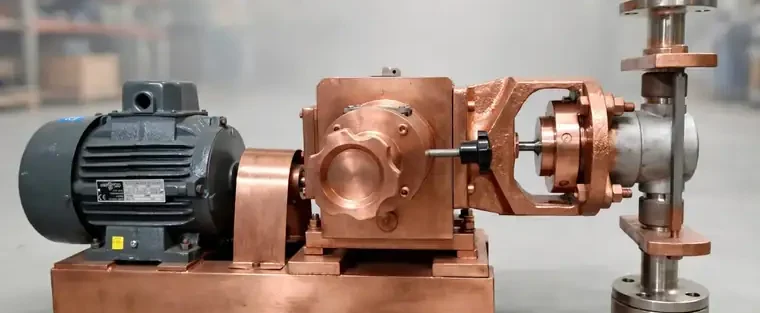
Plunger vs Diaphragm Metering Pump: Which One Should You Choose?
Plunger and diaphragm pumps are the two main types of metering (dosing) pumps used in process plants. Both are positive displacement pumps: every stroke moves a fixed volume, so the dose stays steady even when line pressure changes. The difference is how the moving part meets the chemical.
How a plunger metering pump works
A plunger (piston) moves back and forth inside the liquid end. On the suction stroke it draws chemical in through the suction check valve. On the discharge stroke it pushes the chemical out through the discharge check valve. Packing rings around the plunger seal the chemical in.
Plunger pumps handle high discharge pressures well, which is why they are common for boiler feed chemicals and chemical injection into pressurised lines. See our 1000 LPH SS316 plunger metering pump.
How a diaphragm metering pump works
In a diaphragm pump, a flexible diaphragm (usually PTFE or PTFE-faced) separates the chemical from the moving parts. The plunger or mechanism moves the diaphragm, and the diaphragm moves the chemical. There is no packing in contact with the chemical, so there is no gland leakage.
That makes diaphragm pumps the safer choice for hazardous, toxic or expensive chemicals. See our 1000 LPH PP diaphragm metering pump.
Side-by-side comparison
| Factor | Plunger pump | Diaphragm pump |
|---|---|---|
| Sealing | Packing around the plunger | Diaphragm, no gland |
| Leakage risk | Small controlled gland leakage possible | Leak-free in normal operation |
| Discharge pressure | Suits high pressure | Suits low to medium pressure (hydraulic types go higher) |
| Hazardous chemicals | Use with care | Preferred |
| Main wear parts | Packing, plunger, check valves | Diaphragm, check valves |
| Typical uses | Boiler chemicals, injection, caustic | Hypochlorite, acids, toxic chemicals |
Not sure which type suits your chemical?
How to choose: 4 questions
- Is the chemical hazardous or costly? If a leak is unsafe or expensive, go diaphragm.
- What is the discharge pressure? For high-pressure injection, a plunger pump is usually the better fit.
- Does the chemical give off gas? Gassing chemicals such as sodium hypochlorite need careful suction design with either type.
- What maintenance can your team handle? Plunger pumps need packing attention; diaphragm pumps need periodic diaphragm checks.
Common mistakes
- Choosing on price alone and ending up with gland leakage of an acid
- Using a diaphragm pump far above its pressure rating
- Forgetting a pressure relief valve on the discharge line
Summary
Both pump types dose accurately. The right choice depends on the chemical, the pressure and how much leakage risk your plant can accept. Read more on our industry pages or share your application with us.
About Jagdish Engineering Works
Jagdish Engineering Works (JEW) has manufactured metering pumps and pressure relief valves in Goregaon (East), Mumbai since 1969. We also repair pumps, supply spares and offer annual maintenance contracts.
Have a question about your dosing application?
Jagdish Engineering Works, Mumbai – manufacturer of plunger and diaphragm metering pumps and pressure relief valves since 1969. Our engineers design, test and repair dosing pumps for water treatment, chemical, refinery, fertilizer, sugar and paper plants.
About JEW · Engineering resources · Ask an engineer on WhatsApp